
 By
By 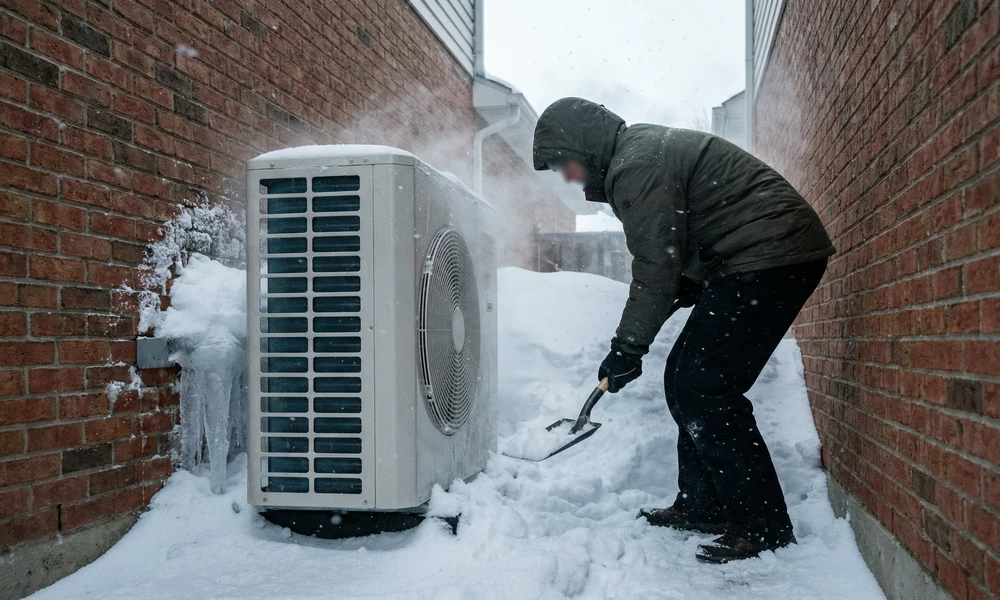
The worst heat pump mistake I see in southwest Missouri isn’t a bad brand. It’s a unit that’s one size too big. A contractor talks a homeowner into a 4-ton system to “be safe,” and by February that house is warm but miserable: short cycles, clammy air, a compressor that wears out years early. Sizing is the whole ballgame, and it has almost nothing to do with square footage alone.
This guide walks you through how sizing actually works for an Ozarks winter, the numbers that matter, and the questions to ask before anyone quotes you a system. You’ll come away knowing whether a proposal is honest or just convenient.
Why Square Footage Alone Gets It Wrong
Every rule-of-thumb chart you’ve seen (so many BTUs per square foot) assumes an average house with average insulation in an average climate. Your house isn’t average. Springfield sits in a zone where winter design temperatures dip into the teens, and a 1960s ranch with original windows loses heat twice as fast as a new build with a tight envelope.
Two houses of the same square footage can need heat pumps that differ by a full ton, sometimes more. Square footage is a starting point, never the answer. The real answer comes from a load calculation that accounts for your walls, your attic, your windows, your ductwork, and how much air leaks through every seam.
Here’s the frustrating part: plenty of installers skip that step because it takes time and they already know what they want to sell you.
What a Proper Load Calculation Actually Measures
A load calculation, often called a Manual J in the trade, is a room-by-room accounting of how much heat your home loses on the coldest day of the year. It’s not a guess. It’s math based on measured and specified inputs.
The pieces that matter most in our climate:
- Design temperature. The outdoor temperature your system must handle. Local codes and good practice set this near the coldest normal conditions for the area, not the all-time record low.
- Envelope performance. Insulation levels, window type and count, and how leaky the shell is. A blower door test tells you the last part.
- Duct losses. If your ducts run through a cold attic or crawlspace, a chunk of your heat never reaches the rooms.
- Internal gains. People, appliances, and solar heat offset some of the load. Ignoring them pushes you toward oversizing.
The American Society of Heating, Refrigerating and Air-Conditioning Engineers publishes the fundamentals behind these calculations, and any contractor worth hiring can explain which method they used. If they can’t, that’s your answer.
What “Cold Climate” Means for a Heat Pump in Missouri
Heat pumps get a bad reputation from people who remember the units from twenty years ago. Modern cold-climate models hold their capacity much lower into the teens and single digits, which matters here because our winters swing hard.
The catch is that a heat pump’s rated capacity and its actual output at 15 degrees aren’t the same number. A good proposal shows you the capacity at design temperature, not the glossy brochure number. If a salesman only talks about the efficiency rating and never mentions performance at low outdoor temps, they’re selling you paperwork instead of warmth.
Most homes in this region end up with a heat pump paired with a backup or supplementary heat source for the handful of nights that push past the unit’s comfortable range. That’s normal and smart. What isn’t smart is choosing a system where the backup runs every cold week because the main unit was undersized for real conditions.
A system’s efficiency ratings are defined through federal test procedures, and the U.S. Department of Energy explains how those ratings work, including the difference between seasonal and peak performance. It’s worth ten minutes of reading before you sign anything.
The Balance Point Framework
Here’s a way to think about sizing that I haven’t seen spelled out anywhere else, so I’ll call it the balance point framework. It’s the lens I’d use if I were buying a system tomorrow.
Every heat pump has a balance point: the outdoor temperature where its output exactly matches your home’s heat loss. Above that temperature, the heat pump alone keeps you comfortable. Below it, something else has to help.
So sizing isn’t about picking the biggest unit. It’s about three decisions:
- Where do you want the balance point to sit? A slightly larger unit pushes it lower, which means fewer backup hours but more short-cycling in mild weather.
- How much backup do you want? Electric resistance strips are cheap to install and expensive to run. Some homeowners prefer a dual-fuel setup that switches to a furnace below a set temperature.
- What’s your comfort tolerance? If you hate temperature swings, favor tighter sizing and better controls over raw capacity.
Notice what’s missing from that list: brand. Brand matters less than sizing and installation quality, and I’ll stand behind that claim. A well-sized mid-tier unit beats an oversized premium one every winter.
A Real Example From a Springfield-Area Ranch
A homeowner I’ll call Dana bought a 1968 ranch outside Springfield, about 1,600 square feet, with a finished basement and single-pane windows on the north side. The first quote recommended a 4-ton system based on square footage alone.
A second contractor ran a load calculation, found significant duct leakage in the crawlspace and almost no attic insulation, and came back with a 2.5-ton recommendation plus a few air-sealing fixes. Dana spent about the same money, got a smaller unit, and the house held temperature better through January than her old furnace ever had.
The lesson isn’t “always go smaller.” It’s that the house matters as much as the equipment. Fixing the envelope sometimes shrinks the system you need, which lowers both your upfront cost and your monthly bill.
Questions to Ask Before You Sign
Use this as a checklist when you’re comparing quotes. Any contractor who can answer all five is worth a second conversation.
- Did you run a room-by-room load calculation, and can I see it?
- What’s the system’s capacity at our winter design temperature?
- Where does the balance point fall, and how often will backup heat run?
- Should we address duct sealing or insulation before sizing the unit?
- What happens to my warranty and service calls if the system is undersized or oversized?
For homeowners in this area, working with a local team that handles both repair and replacement makes the process simpler, since the same crew that sizes your system will be the one servicing it. If you’re ready to move forward, professional heat pump installation in Springfield, MO, starts with an honest load calculation, not a square-footage guess.
The Bottom Line on Sizing
Getting the size right is the difference between a system that hums through February and one that limps. Insist on a load calculation, ask about performance at real winter temperatures, and don’t let anyone sell you capacity you don’t need.
Your next move: pull out any recent utility bills and jot down your square footage and insulation details before your first quote. That prep puts you in a much stronger position to spot a lazy proposal when you see one. What’s your home’s current system size, and does it match what the math says you need?





Comments