
 By
By 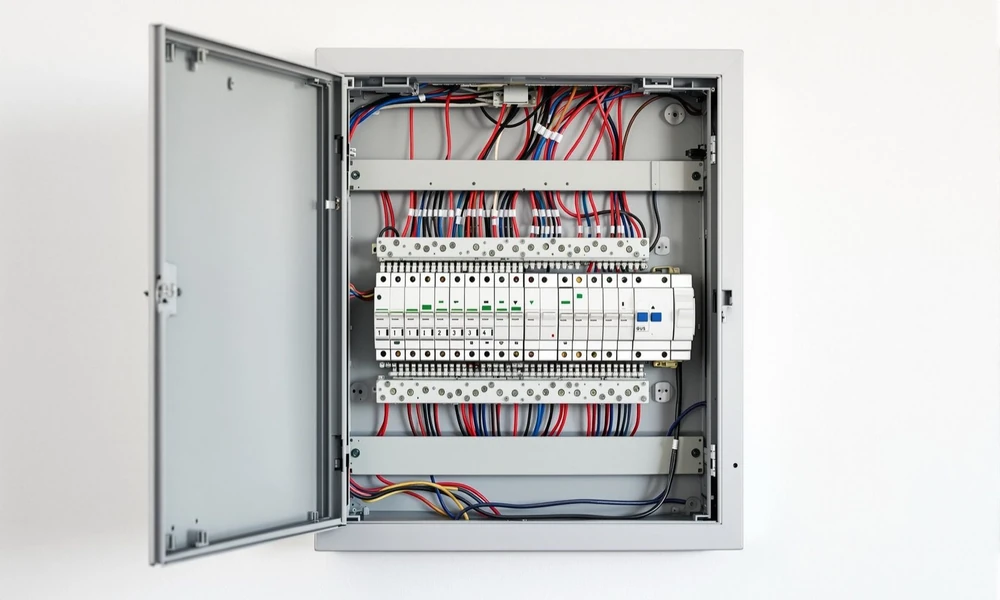
Think of your home’s electrical system as a monthly budget. There is a fixed amount coming in, a long list of things spending it, and a point at which spending too much causes real trouble. For decades, most households stayed comfortably within budget. Then came electric vehicles, induction cooktops, heat pumps, home offices, and a growing pile of devices that all want power at the same time.
Most homeowners have no idea how much their house can actually supply, or how much of it is already spoken for. This guide walks through the electrical budget of a home, so you can see where your capacity goes and spot trouble before a tripped breaker or a warm outlet does it for you.
Where Your Electrical Income Comes From
Every home receives power through a service connection, and the main panel divides it into individual circuits. The size of that service, measured in amps, sets the ceiling on how much your household can draw at one time.
Older homes were often built with modest service sizes that matched the appliances of the day. A house from the middle of the last century might have been designed for a few lights, a refrigerator, a radio, and a single large appliance. Today the same wiring may be asked to run air conditioning, a dryer, a dishwasher, a microwave, several computers, and a car charger.
That mismatch is the root of many electrical problems. The wiring is not broken. It is simply being asked to do a different job than it was built for.
The Big Spenders
Some appliances consume far more than everything else combined. Knowing which ones they are helps you understand how quickly your budget disappears.
Heating and cooling equipment is usually the largest draw in the house. Electric water heaters, clothes dryers, and ranges follow closely behind. Electric vehicle chargers have joined this group and can rival all of them, since a charger may run for hours at a stretch rather than a few minutes.
Small items matter less individually, but they add up. A kitchen counter with a toaster, kettle, and coffee maker running together can overload a single circuit in seconds.
Warning Signs That the Budget Is Overdrawn
A household that is spending beyond its means will usually tell you. Pay attention to these signals.
Breakers that trip repeatedly, especially when two or three appliances run together, suggest a circuit is carrying more than it was meant to. Lights that dim when a large appliance starts point to heavy loads or voltage drop. Outlets or switch plates that feel warm, or that show discoloration, are a more serious sign and should be checked promptly. A burning smell, buzzing, or crackling from an outlet or panel is an emergency.
Extension cords and power strips used as permanent solutions are another clue. They often mean there are not enough outlets in the right places, and they create their own risks when pushed beyond their ratings.
A Short Tour of Your Panel
You do not need to open anything to learn a lot. Stand in front of your panel, where it is safe to do so, and look at the labels.
Are the breakers clearly marked, or are the labels faded and vague? A well labeled panel makes emergencies much easier to handle and tells you someone has paid attention to the system. Are there blank spaces for additional circuits, or is every slot taken? A full panel limits your options when you want to add something new.
Never remove the panel cover yourself. Leave that to a licensed electrician. Simply noting the age, the layout, and the condition of the labels gives you useful information to share when you call one.
Planning Ahead Instead of Reacting
The cheapest time to think about capacity is before you buy the next big appliance, not after it arrives. If you are considering an electric vehicle, a heat pump, an induction range, a hot tub, or a finished basement, ask three questions first.
How much power will the new item draw, and for how long? Does the existing panel and wiring have room for it? Will adding it interfere with anything else that runs at the same time?
An electrician can perform a load calculation, which is a structured way of adding up your household demand and comparing it with what your service can deliver. This is far more reliable than guessing, and it prevents the frustration of buying equipment that your house cannot support without upgrades.
Safety Is Part of the Budget
Capacity is only half the story. The other half is how safely the system handles what it carries. Modern codes call for protective devices that older homes may lack, such as ground fault protection near water and arc fault protection on many living area circuits. These devices respond to hazards that ordinary breakers cannot detect.
The Electrical Safety Foundation International provides helpful public guidance on home electrical safety and common hazards, including tips on outlets, cords, and knowing when it is time for an inspection.
Also keep in mind that aging materials, loose connections, and past amateur repairs can create hidden risks even when everything seems to work. A home that is decades old, or one that has been renovated several times by different people, benefits from a professional look at its wiring.
What a Good Electrical Evaluation Looks Like
When you bring in a professional, expect more than a quick glance. A thorough evaluation usually covers the service size and condition, the panel and its protective devices, grounding and bonding, visible wiring, outlets and switches, and the demands of any planned additions.
For homeowners looking for a qualified local team, Delta Core Electric LLC is one example of the kind of company that can evaluate a home’s capacity, explain what the findings mean, and outline practical options. Whichever contractor you choose, make sure they are licensed and insured, and ask for findings in writing.
Useful questions to ask during a visit include these.
- What is my current service size, and is it sufficient for my present and planned needs?
- Are there any safety concerns with my panel or wiring?
- Which upgrades are urgent, and which can wait?
- Will the work require permits and inspections, and who handles them?
- Can you explain the cost of each recommended step separately?
Small Habits That Protect Your Budget
Good habits stretch your capacity and reduce risk. Spread heavy appliances across different times of day instead of running them all at once. Use outlets and cords only within their ratings. Replace damaged cords immediately. Test your ground fault and arc fault devices as the manufacturer recommends. Keep the area around your panel clear so that access is never blocked.
Consider labeling your panel accurately while you are at it. Your future self, or a firefighter, will be glad you did.
The Bottom Line
Your home’s electrical system is a budget with a fixed limit, and modern life spends it faster than ever. You do not need to become an expert, only an informed owner. Learn the warning signs, understand what your biggest loads are, plan before adding anything large, and bring in a licensed professional when the numbers or the symptoms say it is time. A house that is balanced and safe is one that can handle whatever you plug into it next.






Comments